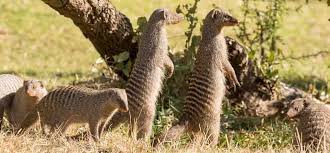
Mongoose species in Uganda
Mongoose are small to medium-sized carnivorous mammals that belong to the family Herpestidae. They are widely distributed across Africa, Asia and parts of southern Europe, but Africa has the largest diversity of mongoose species. These species are well known for their agility, intelligence and bold hunting behavior especially their ability to fight and kill venomous snakes. Mongooses have long slender bodies, short legs, pointed faces and long tails, which allow them to move quickly through grass, bushes, and forest vegetation while searching for food.
Uganda is home to a variety of mongoose species that can be found in forest, savannah, and wetland areas. The most common species include; Banded mongoose and common dwarf mongoose. Other species include; slender mongoose, Jackson mongoose, marsh mongoose and white tailed mongoose. These species are often spotted in protected areas such as Queen Elizabeth National Park, Bwindi Impenetrable, Murchison Falls, Kidepo Valley and Lake Mburo National Park.
Habitat and distribution of mongoose in Uganda
Mongooses are highly adaptable mammals that can live in many different types of environments. In Uganda, they are found in a wide range of habitats including savannah grasslands, woodlands, forests, wetlands, and areas close to human settlements. Their ability to adapt to different environments makes them one of the most widely distributed small carnivores in the country.
Most mongoose species prefer open habitats with plenty of ground cover where they can easily search for food such as insects, small reptiles, rodents and bird eggs. They also look for areas with natural shelters like termite mounds, rock crevices, dense bushes and abandoned burrows which they use for sleeping and protection from predators.
Distribution in Uganda
Different mongoose species are distributed across several protected areas and wildlife habitats in Uganda. The Banded Mongoose is commonly found in savannah ecosystems such as Queen Elizabeth National Park, Murchison Falls National Park and Lake Mburo National Park. These parks provide suitable habitats with open grasslands and woodlands where mongooses can easily move and hunt.
The Common Dwarf Mongoose is also found in dry savannah and woodland habitats, particularly in areas such as Kidepo Valley National Park and Lake Mburo National Park. These locations offer warm climates and abundant insect populations that support their diet.
Some other mongoose species like Jackson’s Mongoose, Slender Mongoose, Marsh Mongoose and the White-tailed Mongoose can also be found in forest environments, especially around the edges of tropical forests in western Uganda. Forest parks such as Kibale National Park and Bwindi Impenetrable National Park provide habitats for forest-dwelling mongooses.
Dietary habits of Mongooses
Mongooses are omnivorous animals, which means they eat both animal and plant matter. Their diet is very flexible which allows them to survive in different habitats such as savannahs, forests, wetlands and areas close to human settlements. In Uganda, mongooses feed on a wide range of small animals and natural food sources that are easy to hunt or gather.
A large part of a mongoose’s diet consists of insects. They commonly feed on beetles, termites, grasshoppers, ants and other small invertebrates. Species such as the Banded Mongoose are often seen digging in the soil or turning over stones while searching for insects and larvae.
Mongooses also hunt small mammals like mice, rats, and other rodents. These animals are an important source of protein and help mongooses maintain their energy. By feeding on rodents, mongooses help control pest populations in both natural and human environments.
Many mongoose species feed on lizards, frogs, and snakes. Mongooses are especially famous for their ability to fight and kill snakes, including venomous ones. Their quick reflexes and thick fur provide some protection during these encounters. They also sometimes prey on small birds and bird eggs, especially when they find nests on the ground or in low bushes. Eggs are an easy and nutritious food source.
Species that live near water, such as the Marsh Mongoose, may feed on fish, crabs, frogs, and other small aquatic animals found in rivers, swamps, and wetlands. Although mongooses are mainly carnivorous, they may also eat fruits, berries, and seeds when available. This usually happens during seasons when animal prey is less abundant.
Hunting Behavior
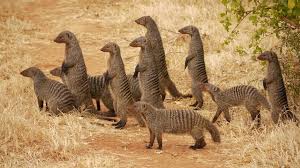
Mongooses usually forage during the day, moving quickly through grass and bushes while searching for food. Some species hunt alone, while others such as the banded mongoose hunt in cooperative groups, which increases their chances of finding food.
Reproduction of Mongooses
Mongooses have interesting reproductive behaviors that vary slightly depending on the species. In general, these animals reproduce throughout the year, especially in areas where food is available and environmental conditions are favorable. In places like Uganda, breeding may occur during seasons when there is plenty of food, which increases the chances of survival for the young.
Mating and Breeding
Mongooses usually reach sexual maturity at about one year of age. In some species, breeding occurs between a dominant male and female within a group, while in others individuals mate freely. Social species such as the Banded Mongoose often live in groups where several females may become pregnant at the same time.
Gestation Period
After mating, the female mongoose goes through a gestation period of about 40 to 60 days, depending on the species. During this time the female prepares a safe place such as a burrow, hollow log, or thick vegetation where she will give birth and protect the young from predators.
Birth and Litter Size
Female mongooses usually give birth to 2 to 4 young although some species may have slightly larger litters. The babies are born blind, helpless and covered with very little fur, so they rely completely on their mother for warmth, protection and food.
Parental Care
In social mongoose species, raising the young is often a group effort. Other members of the group may help guard the babies and bring food to the nursing female. In species that live alone, the mother raises the young by herself until they are strong enough to follow her.
Growth and Independence
Young mongooses grow quickly. Their eyes usually open after a couple of weeks, and they begin to explore their surroundings while still staying close to the den. After about two to three months, they start learning how to hunt by observing adults. Eventually they become independent and begin to search for their own food.
Behavior and Social Structure of mongoose
Banded Mongoose
The banded mongoose is one of the most social mongoose species. They usually live in large groups called troops which may include 10 to 40 individuals. These groups work together in many aspects of daily life such as feeding, raising young and protecting their territory.
Banded mongooses are active during the day. They move together while searching for food like insects, termites, small reptiles, and other small animals. While the group is feeding, some members act as guards or lookouts, standing upright to watch for predators. If danger is spotted, they make alarm calls to warn the rest of the troop.
Another interesting behavior of banded mongooses is cooperative breeding. Several females in the group may give birth around the same time, and other adults help care for the young. The babies are often protected and guided by older members of the troop.
These mongooses also communicate through different vocal sounds, scent marking, and body movements. They usually sleep in burrows, termite mounds or rock crevices and may change sleeping sites regularly. In Uganda, banded mongooses can often be seen in open savannah areas such as Queen Elizabeth National Park, Murchison Falls National Park and Lake Mburo National Park.
Dwarf Mongoose
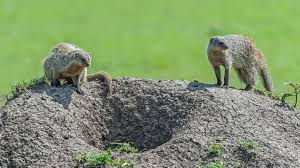
The dwarf mongooses are the smallest mongoose species but has a well organized social structure. They normally live in small family groups of about 5 to 20 individuals. Each group is usually led by a dominant breeding pair while the other members help with protecting the group and raising the young.
Dwarf mongooses spend most of their time foraging for insects and small invertebrates in grass and bushes. One special behavior of dwarf mongooses is the use of a sentinel system. While the group feeds, one member stands on a raised place such as a rock or termite mound to watch for predators. If danger is seen, the sentinel gives a loud call so that the others can quickly hide.
At night, dwarf mongooses sleep in abandoned termite mounds, tree holes, or underground burrows. They often change sleeping sites to stay safe from predators. The dwarf mongooses in Uganda can be found in savannah and woodland habitats such as Kidepo Valley National Park and Lake Mburo National Park.
Conservation Status and Efforts of Mongooses in Uganda
Mongooses are generally adaptable animals and can survive in a wide range of habitats such as forests, savannahs, wetlands and areas close to human settlements. However, like many wildlife species, some mongoose populations face pressures from human activities and environmental changes.
Conservation Status
Most mongoose species found in Uganda, including the Banded Mongoose and the Common Dwarf Mongoose, are currently classified as Least Concern by the International Union for Conservation of Nature. This means their populations are still relatively stable across their natural ranges.
Despite this status, mongooses can still face threats in some areas. Habitat loss caused by agriculture, settlement expansion and deforestation can reduce the spaces where these animals live and find food. In some rural communities, mongooses may also be killed because they are sometimes seen as pests or because they prey on poultry.
Conservation Efforts
Several efforts help protect mongooses and other wildlife species in Uganda. National parks and protected areas provide safe habitats where wildlife can live with less disturbance from human activities. Parks such as Queen Elizabeth National Park, Murchison Falls National Park and Kidepo Valley National Park play an important role in conserving mongoose populations.
Wildlife protection is also supported by the Uganda Wildlife Authority which manages national parks, enforces conservation laws and works with local communities to promote wildlife conservation.
In addition, conservation programs encourage community awareness and education about the importance of wildlife in maintaining healthy ecosystems. Protecting natural habitats, reducing human-wildlife conflict and promoting responsible tourism also help support mongoose populations.
Mongoose tracking in Uganda
Mongoose tracking is a unique wildlife experience that allows visitors to closely observe the daily life and behavior of mongooses in their natural habitat. Unlike traditional wildlife viewing where animals are seen during game drives, mongoose tracking involves following a specific group of mongooses on foot with trained guides and researchers. This activity offers visitors the opportunity to learn about the animals’ social structure, feeding habits, communication and movement patterns.
During the tracking experience, visitors usually accompany researchers or wildlife guides early in the morning when the mongooses leave their sleeping dens to begin searching for food. The activity often involves quietly walking through the savannah or woodland areas while observing how the mongooses interact with each other, hunt insects, and watch out for predators.
The activity is conducted in Queen Elizabeth National Park where researchers have habituated certain groups of Banded Mongooses so that they are comfortable with human presence. This makes it possible for visitors to watch them from a close but respectful distance without disturbing their natural behavior. The tracking program is carried out in collaboration with the Uganda Wildlife Authority and the Mweya Information Centre where scientists study the ecology and social behavior of the banded mongoose.
During the activity, visitors can observe several interesting behaviors such as:
- Mongooses working together while searching for food
- Sentinel behavior where one mongoose acts as a lookout for predators
- Communication through calls and body movements
- Grooming and playful interactions within the group
- The way they dig for insects and small animals
For visitors looking for something different from the usual safari activities, mongoose tracking provides a rare opportunity to walk with wildlife researchers and observe one of Africa’s most fascinating small predators up close.