Uganda museum
The Uganda Museum is the oldest museum in East Africa and one of the most important institutions for preserving the cultural, traditional and historical heritage of Uganda. It is located on Kitante Hill along Kira Road in Kampala a few kilometers from the city center and near Mulago National Referral Hospital. The museum serves as a national centre for the collection, conservation, research and exhibition of Uganda’s cultural, historical, archaeological and scientific heritage.
History of Uganda Museum
The idea of establishing the museum began in 1902 when George Wilson who served as the deputy governor of the Uganda Protectorate, encouraged officials, explorers and missionaries to collect objects that represented Uganda’s cultures and natural history. These early collections were meant to help document Uganda’s natural history and cultural traditions. The museum was officially established in 1908.
In the early years, the artefacts did not have a permanent home and were kept in different locations, for instance, Fort Lugard which served as an administrative center during the colonial period. As the number of artefacts increased, there was a need for a permanent building and later in 1954, the museum was moved to its current location on Kitante Hill where it continues to operate today as the national museum of Uganda.
Collections and exhibition
The Uganda Museum houses a wide range of collections that tell the story of Uganda’s cultural, historical and scientific background. These collections are organized into different sections. Each section of the museum highlights a different aspect of the country’s heritage.
One of the most significant sections is the ethnography gallery which displays artefacts from many of Uganda’s ethnic communities. This sector has traditional clothes, hunting tools, household equipment, ceremonial objects and weapons used by different groups across the country. These artefacts explain how people lived, worked and organized their societies in earlier times.
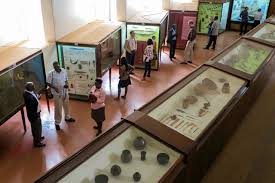
Another important section is the archaeology gallery which contains artefacts from prehistoric Uganda. These include ancient stone tools, pottery fragments and iron working materials that show how early communities developed technology and adapted to their environments thousands of years ago.
The museum also has a paleontology section which displays fossils and geological findings that provide information about prehistoric animals and environmental conditions that existed in the region million years ago.
A favorite area for visitors is the traditional music gallery which displays musical instruments from different parts of Uganda. Instruments here like drums, flutes, xylophones and string instruments portray the role of music in ceremonies, storytelling, celebrations and cultural expression in Uganda communities.
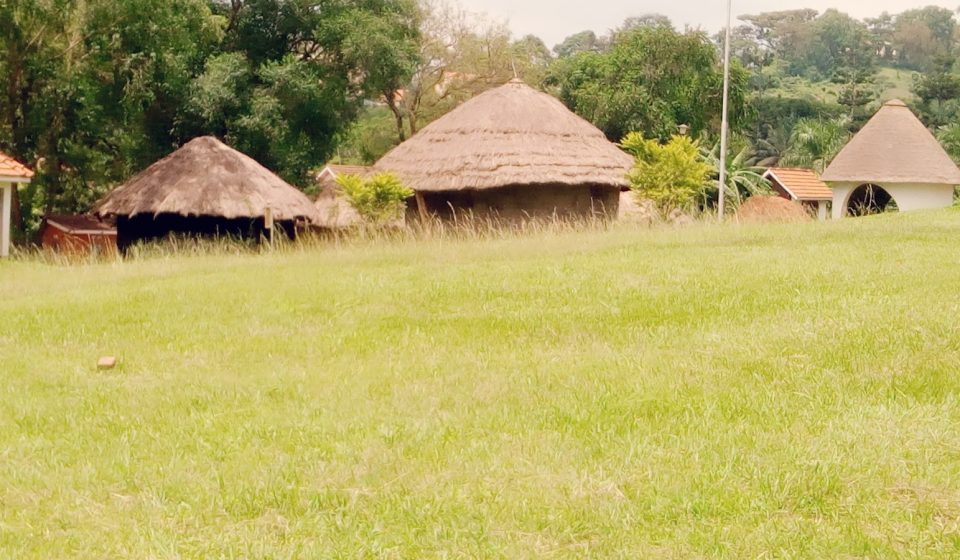
Outside the museum building, there are traditional homesteads and huts from different Ugandan communities. These structures show how various ethnic groups designed their homes using local materials and architectural styles that suited their environment.
Tourism and the Uganda Museum
The Uganda Museum is an important tourist attraction in Kampala. For visitors who want to know Uganda before exploring national parks, visiting the Uganda museum is a must. The museum also hosts cultural events, temporary exhibitions, workshops and performances.
Recent updates about Uganda Museum
Since August 2024, the Uganda Museum has been temporarily closed to allow renovation works led by the Ministry of Tourism, Wildlife and Antiquities. The project is supported by the World Bank through the Competitiveness and Enterprise Development Project.
The renovation aims to improve the museum building, modernize exhibition spaces and create better storage facilities for artefacts. Another key component of the project is the digitization of museum collections which will allow researchers and the public to access information about artefacts through digital platforms.
While the museum remains closed, travelers can explore several important cultural and historical sites across Uganda that offer valuable insight into the country’s past. For instance,
Nyero Rock Paintings
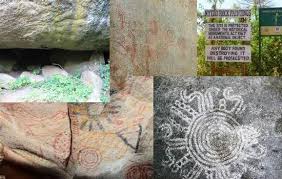
The site is located in Kumi district in eastern Uganda. Nyero Rock paintings is one of the most significant rock art sites in Uganda. The paintings here are believed to have been created by early inhabitants possibly linked to ancient hunter-gatherer communities. The site features geometric and symbolic designs painted in red pigment on rock surfaces.
Nyero provides insight into early artistic expression, spiritual beliefs and communication methods of prehistoric communities. The site is managed as a cultural heritage area and is accessible to visitors interested in archaeology and early human history.
Bigo Bya Mugyenyi
Bigo Bya Mugyenyi also known as Fort of the stranger is a UNESCO world heritage site located in Sembabule district in western Uganda. It is an archaeological site featuring extensive earthwork consisting of ditches, embankments and bank enclosures. The site is associated with the ancient Bacwezi which is believed to have existed between the 13th and 16th centuries.
Archaeological studies suggest that Bigo Bya Mugyenyi may have served as a political or administrative centre. The scale of the earthworks indicates organized labour and complex social structures. For researchers and visitors interested in early state formation and political organization in the Great Lakes region, Bigo Bya Mugyenyi is a must visit.
Kibiro Salt Gardens
Kibiro Salt Gardens are located on the bottom of western rift valley on the eastern shores of Lake Albert, about 35 kilometers from Hoima city. The site is known for traditional salt extraction methods that have been practiced for generations. Local communities extract salt from salty soils and brine using evaporation techniques.
The process involves collecting salty soil, filtering it with water to produce brine and boiling the brine until salt crystals form. This traditional industry has historical and economic importance and is believed to date back several centuries. Visitors can observe the salt-making process and learn about the role of salt in trade and local livelihoods.
Patiko (Baker’s Fort)
Patiko also known as Baker’s Fort is located in Gulu District in northern Uganda. The site was built by Sir Samuel Baker in 1872. The fort is associated with 19th-century historical events which includes slave trade in East Africa and campaigns of the British explorers.
Later in 1888, Sir Samuel Baker left and the site was occupied by Emin Pasha and Charles Gordon who served as the governors of the equatorial province of the British protectorate government in Uganda. The remains of the fort include rock outcrops and stone structures that were once used as a military and administrative post.
The site provides historical insight into colonial expansion, anti-slavery campaigns and interactions between local communities and foreign explorers during the 19th century.