
Gorilla trekking and conservation
Gorilla trekking is closely linked to the conservation of mountain gorillas in Uganda, Rwanda and the Democratic Republic of Congo (DRC). Visitors pay for permits, travel to protected areas, stay in nearby communities and use local services. Part of the money generated through tourism supports protected-area management and community programmes.
Mountain gorillas live in only two areas. One population is found in Uganda’s Bwindi Impenetrable National Park while the other lives in the Virunga Volcanoes landscape shared by Uganda, Rwanda and the Democratic Republic of Congo. The species is classified as endangered and its survival depends on continued protection of its forest habitat, careful monitoring, disease prevention and cooperation between the countries where the gorillas live.
Gorilla trekking alone does not explain the progress made in mountain gorilla conservation. Ranger patrols, scientific research, veterinary care, habitat protection and community involvement are also important. Tourism is one part of this wider conservation system.
What is gorilla conservation?
Gorilla conservation means protecting mountain gorillas, their habitat and the conditions they need to survive and reproduce. Mountain gorillas face several threats. These include habitat loss, human encroachment, disease, illegal activities and the effects of conflict in parts of their range. The IUCN’s conservation information identifies disease transmission, habitat loss and human activities among the main concerns for the species.
Conservation therefore involves more than protecting individual gorillas. It includes protecting forests, monitoring gorilla groups, preventing illegal activities, treating sick or injured animals, supporting research and working with people living close to protected areas. In Uganda, Bwindi Impenetrable National Park is a major part of this work. The park covers about 32,000 hectares and is recognised by UNESCO as a World Heritage Site. It contains important forest habitat and is home to almost half of the world’s mountain gorilla population.
How does gorilla trekking support conservation?
Gorilla trekking provides a source of income linked directly to protected areas. Visitors must obtain a permit before trekking habituated gorilla groups. The money paid by visitors contributes to the tourism system managed by the relevant wildlife authorities. This provides funds for park management and creates economic activity around the protected areas.
Tourism also gives local communities an opportunity to earn money from visitors. Guides, porters, drivers, accommodation providers, restaurants, craft sellers and other businesses can benefit from gorilla tourism.
This economic connection matters because conservation takes place in areas where people also need land, jobs and services. When communities receive benefits from protected areas, tourism can provide an additional reason to support their protection.
However, it is important not to describe tourism as the only reason gorilla populations have improved. Conservation also depends on long-term ranger monitoring, research, veterinary support, law enforcement, habitat protection and cooperation between government agencies and conservation organisations.
Where does gorilla trekking revenue go?
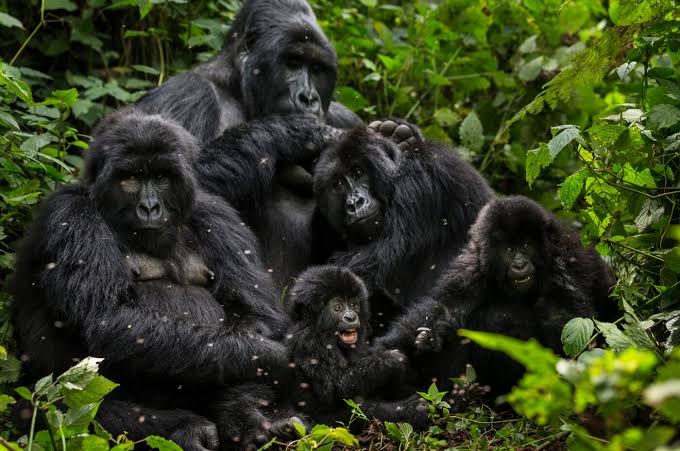
The way tourism revenue is distributed differs between countries and programmes. In Uganda, UWA operates a revenue-sharing programme for communities neighbouring protected areas. UWA states that 20% of annual park revenue is shared with communities around national parks and wildlife reserves. Its community conservation information also states that at Bwindi US$10 from each gorilla-tracking permit is shared through the programme.
The funds can support projects that improve livelihoods or help reduce human-wildlife conflict. Examples include schools, health centres, water facilities, feeder roads, tree planting, beekeeping and livestock projects. In June 2025, UWA reported distributing UGX 2.197 billion to communities around the Bwindi-Mgahinga Conservation Area. The money came from park entry fees and the gorilla permit levy and was allocated for local development projects.
Rwanda also operates a tourism revenue-sharing programme. The Rwanda Development Board states that 10% of national park revenues are reinvested in socio-economic projects for communities around protected areas. Since 2005, the programme has funded projects including schools, health centres and dairy farms. Revenue does not simply mean money handed directly to individual households. In many cases, funds are channelled through government or community structures and used for agreed projects.
How do local communities benefit from gorilla tourism?
Gorilla tourism takes place in areas where communities live close to protected forests. In Uganda, UWA’s community conservation programme aims to improve relations between protected-area managers and neighbouring communities. The revenue-sharing programme is one part of this approach. Communities can also benefit directly from tourism businesses.
A visitor who comes for gorilla trekking may pay for:
- A gorilla permit
- Accommodation
- Transport
- A local porter
- Food
- Guiding services
- Cultural activities
- Locally made crafts
This means tourism income can reach people outside the national park itself.
Community projects can also address some of the costs of living close to wildlife areas. Crop damage and other forms of human-wildlife conflict can create tension between communities and protected-area authorities. UWA’s revenue-sharing programme is partly intended to reduce these problems while supporting local livelihoods.
The relationship is not always simple. Not every household benefits directly from tourism, community programmes need proper management and accountability. Conservation is more likely to receive local support when communities can see practical benefits from protecting the area.
The role of rangers in gorilla conservation
Rangers are an important part of mountain gorilla conservation. Their work includes patrols, monitoring wildlife, supporting visitor activities and helping protect protected areas from illegal activities.
Gorilla monitoring requires regular observation of individual animals and groups. Rangers and trackers record information about births, deaths, movements, behaviour and changes in the health of gorillas.
In Virunga National Park in the DRC, ranger teams have played a major role in protecting mountain gorillas despite years of insecurity in the region. The park reports that its rangers and community trackers conduct regular monitoring and patrols. In its 2025 conservation report, Virunga recorded more than 69,500 gorilla observations and more than 2,250 square kilometres of foot patrols.
Rangers also work with researchers and veterinary teams. This allows problems such as injuries or signs of illness to be identified and addressed.
Why are gorilla trekking rules important?
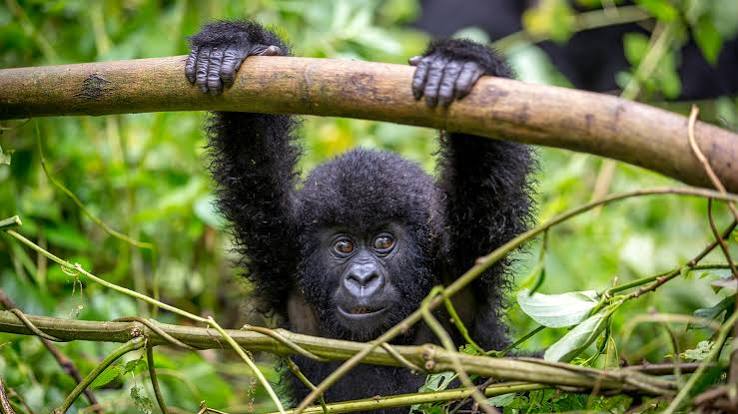 Gorilla trekking rules exist mainly to reduce risks to both visitors and gorillas. Mountain gorillas are accustomed to the presence of people in controlled circumstances but they remain wild animals. Too much human contact can cause disturbance and can increase health risks.
Uganda Wildlife Authority’s guidelines provide rules for the management of gorilla tracking and other tourism activities. The guidelines are designed to control how visitors obtain permits, enter protected areas and take part in tracking activities.
During a trek, visitors are expected to follow the instructions of guides and rangers. They should not attempt to touch or feed gorillas, should avoid unnecessary noise and should follow the required distance and viewing rules.
The rules also help control the number and behaviour of people around a gorilla group. Good visitor management is therefore part of conservation. A gorilla trek should allow people to observe the animals without changing their normal behaviour more than necessary.
Gorilla trekking and disease prevention
Disease is one of the important conservation concerns associated with human contact with mountain gorillas. Humans and gorillas are closely related which means some diseases can pass between them. UNESCO has identified human disease transmission as one of the threats that needs to be managed in Bwindi.
Gorilla Doctors also work on the health of mountain gorillas in Uganda, Rwanda and the DRC. Its veterinary and research work includes monitoring gorilla health and investigating diseases affecting the populations.
Research has shown that parasites and gastrointestinal diseases can affect mountain gorillas. A study involving Gorilla Doctors, the Dian Fossey Gorilla Fund, the Rwanda Development Board and UWA examined changes in parasite communities using gorilla samples collected over many years.
This is why visitors who are sick should follow the health rules provided by park authorities and should not put gorillas at unnecessary risk.
Protecting the forests where mountain gorillas live
Protecting mountain gorillas also means protecting their forests. Bwindi is an important example. UNESCO describes the park as a biologically rich forest containing many species of trees, ferns, birds, butterflies and mammals. It is also surrounded by an agricultural landscape with a high human population density. This creates a conservation challenge. The forest must be protected while people living nearby need land and economic opportunities.
In the Virunga landscape, habitat pressure can come from activities such as agricultural expansion, charcoal production, illegal logging and other forms of resource extraction. Virunga National Park identifies habitat loss and human encroachment among the threats facing its gorillas. Conservation organisations therefore work on habitat protection as well as gorilla monitoring.
In Rwanda, efforts have also included increasing the amount of habitat available to mountain gorillas around Volcanoes National Park. The Rwanda Development Board has reported land acquisition and park expansion efforts intended to provide additional habitat.
Research and monitoring of mountain gorillas
Research provides information needed to make conservation decisions. Scientists and trackers study individual gorillas, family groups, behaviour, reproduction, movement and health. Long-term records help conservation teams identify changes within the population.
The Dian Fossey Gorilla Fund’s Karisoke Research Center in Rwanda has collected data that has contributed to hundreds of scientific publications on gorillas and their environment. The organisation also carries out daily monitoring and research in areas of eastern DRC.
Gorilla habituation is also linked to research. During habituation, researchers and trackers gradually become accepted by a gorilla group. This allows detailed observations and makes it possible for veterinary teams to respond when an animal needs medical attention.
Population surveys are another important part of conservation. They help determine the size and distribution of gorilla populations and provide information for future management.
Gorilla conservation in Uganda, Rwanda and DR Congo
Mountain gorilla conservation is a cross-border effort because the animals live in a shared ecosystem.
Uganda
Uganda’s mountain gorillas are found in Bwindi Impenetrable National Park and Mgahinga Gorilla National Park. Bwindi is managed by the Uganda Wildlife Authority and is a UNESCO World Heritage Site. Tourism, community programmes, ranger patrols, research and habitat protection all form part of conservation work in the area.
UWA’s revenue-sharing system provides financial support to communities around protected areas, while gorilla tourism creates additional local employment and business opportunities.
Rwanda
Rwanda’s mountain gorillas are found in Volcanoes National Park, part of the Virunga massif. The Rwanda Development Board manages the country’s tourism and conservation programmes. Its tourism revenue-sharing programme directs 10% of national park revenue towards community projects around protected areas.
Rwanda also uses gorilla monitoring, research, park management and community programmes as part of its conservation approach.
Democratic Republic of Congo
In the DRC, mountain gorillas live in Virunga National Park. The park is managed by the Institut Congolais pour la Conservation de la Nature (ICCN) with support from conservation partners and other organisations.
Conservation in Virunga takes place in a more difficult security environment than in many other protected areas. Rangers and community trackers continue to monitor gorillas while conservation programmes also address habitat protection and community needs. Virunga reports that more than one-third of the world’s mountain gorillas live in its protected forests.
The three countries also cooperate because the Virunga mountain gorilla population crosses national boundaries. UNESCO notes that Bwindi’s gorillas can move into the nearby Sarambwe forest in the DRC showing why cross-border conservation is important.
Is gorilla tourism sustainable?
Gorilla tourism can contribute to conservation but it needs careful management. Its benefits include:
- Conservation revenue
- Employment
- Community income
- Support for protected areas
- Funding for some conservation programmes
- Greater public interest in protecting gorillas
There are also risks.
Too many visitors can increase disturbance and the possibility of disease transmission. Tourism can also become a problem if communities do not receive a fair share of the benefits or if tourism development puts pressure on natural resources.
For this reason, gorilla tourism is managed through permits, visitor limits, trekking rules, health requirements and trained guides and rangers.
Sustainable gorilla tourism is therefore not simply about bringing more visitors. It is about keeping tourism at a level that can be managed while ensuring that conservation and local communities continue to benefit.
How travellers can support gorilla conservation
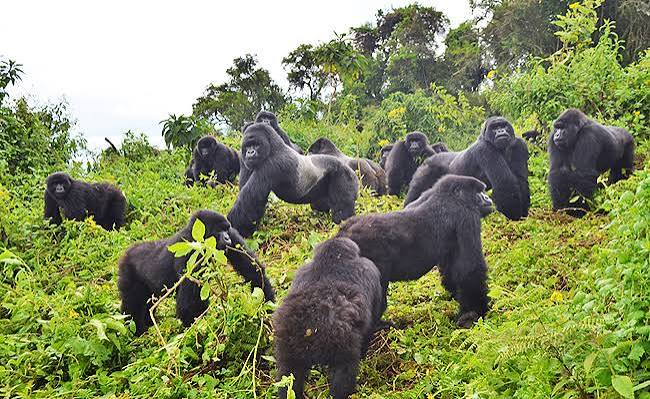
Travellers can make responsible choices before and during a gorilla trek. The first step is to use an authorised permit and follow the rules of the relevant wildlife authority.
Visitors can also support local communities by:
- Hiring a local porter where available.
- Staying in locally operated accommodation.
- Buying crafts directly from community businesses.
- Using local guides and tourism services.
- Following park rules.
- Avoiding littering.
- Respecting gorilla viewing distances.
- Not feeding or touching gorillas.
- Following health requirements.
- Supporting legitimate conservation organisations.
Travellers should also understand that conservation involves local people. Spending money only inside a large international tourism business may provide fewer direct benefits to nearby communities than using a range of local services.
Frequently asked questions about gorilla trekking and conservation
How does gorilla trekking help conservation?
Gorilla trekking generates tourism revenue that can support protected-area management and community programmes. It also creates employment for guides, rangers, porters and tourism businesses.
Where does gorilla permit money go?
The exact distribution differs between countries. In Uganda, tourism revenue supports UWA’s protected-area management, while revenue-sharing programmes provide funds for communities around protected areas. At Bwindi, UWA also has a specific gorilla permit levy for community revenue sharing.
How do communities benefit from gorilla tourism?
Communities can benefit through revenue-sharing projects, employment, accommodation, transport, guiding, porter services, craft sales and other tourism businesses.
Why are gorilla trekking rules necessary?
The rules help reduce disturbance, control visitor numbers and reduce health risks to gorillas. They also help protect visitors and ensure that trekking is properly managed.
Can tourists transmit diseases to gorillas?
Yes. Human diseases can pose a risk to mountain gorillas because of their close biological relationship with people. This is one reason health and visitor-contact rules are important.
Where can I go gorilla trekking?
Mountain gorilla trekking is currently associated with Uganda’s Bwindi and Mgahinga protected areas, Rwanda’s Volcanoes National Park and the Virunga area of the Democratic Republic of Congo. Availability and operating conditions can change, particularly in areas affected by security issues.
Are mountain gorillas endangered?
Mountain gorillas are classified as Endangered. Their population has increased from the very low numbers recorded in previous decades, but the subspecies remains dependent on continued conservation and protection of its limited habitat.
What is the biggest threat to mountain gorillas?
There is no single threat that explains all conservation challenges. Disease, habitat loss, human encroachment, illegal activities and insecurity in parts of their range all affect conservation efforts.
Does gorilla tourism alone protect mountain gorillas?
No. Tourism is one part of conservation. Gorilla protection also requires ranger patrols, research, veterinary care, habitat management, law enforcement, community programmes and cooperation between countries and conservation organisations.