African Golden cat in Uganda
The African Golden cat scientifically known as caracal aurata is the only wild cat species that is found only in Africa’s tropical rain forests. The species is closely related to the caracals and the serval but has unique features which allows it to survive in the forest.
The African Golden cat is one of the rarest and most secretive wild cats found in Africa and in Uganda its population is believed to be small and scattered. Because the species lives in dense forests and is very difficult to observe. Even the scientists have limited information about its exact numbers. Most of the available data comes from camera trap studies and occasional sightings during wildlife research.
In Uganda, the African Golden cat is mainly distributed in the forested regions of the western and southwestern parts of the country where thick tropical forests still exist. The species has been recorded in several protected areas and forest reserves, including Bwindi Impenetrable National Park, Kibale Forest National Park, Kasyoha-Kitomi Forest Reserve and Echuya Forest Reserve.
Although the African Golden Cat is believed to occur in several forest parks in western Uganda, sightings remain extremely rare because the animal is shy and mostly active at night or during quiet periods of the day.
The African Golden Cat strongly depends on forest habitats. In Uganda it mainly lives in tropical rainforests, montane forests, bamboo forests and sometimes in forest edges or riverine forests where prey animals are common. These habitats provide thick vegetation, abundant prey such as rodents, birds and small antelopes, and protection from human disturbance.
The species can also survive in secondary forests or previously logged forests where vegetation has regrown, as long as there is enough cover for hunting and hiding. In some areas, the African Golden Cat has been recorded at high elevations, especially in mountain forest ecosystems.
Physical appearance
The African golden cat is a medium sized wild cat with a strong and muscular body. The size of the golden cat is two times the size of domesticated cats. Its body length usually ranges between 60 and 100 centimeters whereas the tail measures about 16 and 45 centimeters long. The adult cats normally weigh between 5.5 and 16 kilograms depending on their age and sex. The golden cat has a compact and powerful body that is built for moving quietly through dense forests. The legs are relatively short but strong which helps them to climb trees, jump over obstacles and move easily through thick vegetation.
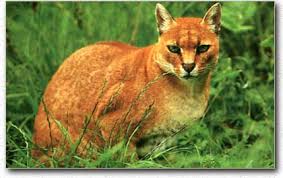
Despite its name, the African golden cat does not always appear golden. The African golden cats have different fur ranging from chestnut to reddish brown while others appear greyish brown or dark brown. In some rare cases, the coat can even be dark- slaty or almost black. The fur is usually short, dense and smooth which helps protect the cat in humid forest environments. Some African golden cats have faint spots or markings although these spots are often difficult to see.
Others the spotting partner is only around the belly and inner legs. African Golden Cats can look quite different from each other. Some have clear spots or stripes, while others appear almost plain in color. Its tail is darker on the top and either heavily banded, lightly banded or plain ending in a black tip. Scientists believe this variation helps them adapt to different forest habitats, making it easier to haunt prey and avoid threats.
The African golden cat has a rounded head with a short muzzle. Its ears are small, shorter and untufted. Its eyes are usually large and the color ranges from yellow to amber. Sometimes they are pale blue and brown in color. This is because the cat is mostly active during the early morning, evening and night.
Its undersides and areas around the eyes, cheeks, chin and throats are lighter in color to almost white. The cat also has strong claws and sharp teeth. The African golden cat differs from other wild cats by skin which has a distinctive whorled ridge of fur in front of the shoulders where the hairs change direction.
Ecology and behavior
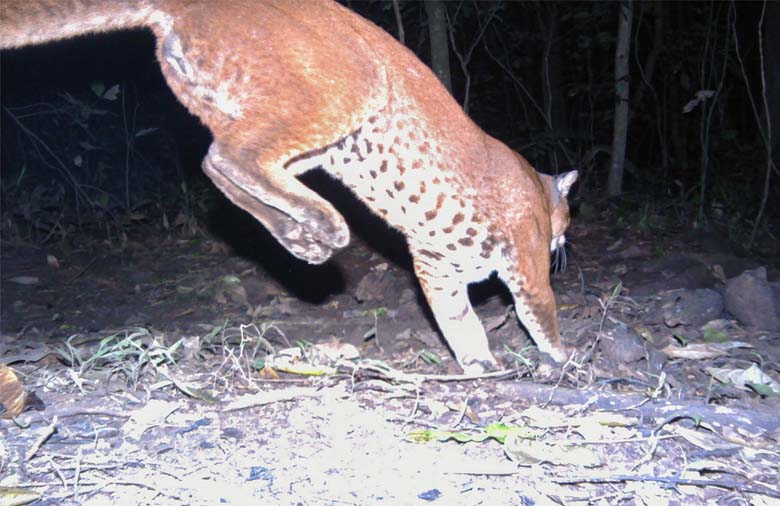
The African golden cat mainly lives in tropical rainforests and montane forests where thick vegetation provides good cover for hunting and hiding. In some areas, it can also be found in bamboo forests, secondary forests and forest edges. The species prefers habitats with dense vegetation, plenty of prey and minimal human disturbance.
The African golden cat is a carnivore. It feeds on a wide variety of animals found in forests. Its common prey includes birds, small monkeys, rodents, reptiles and small antelopes such as duikers. The African golden cat is considered an opportunistic predator since it hunts whatever prey is available in its habitat.
The African golden cat is generally a solitary animal as it lives and hunts alone except during the breeding period or when a mother is raising her young. It is known to be mostly nocturnal and crepuscular as it is most active at night, early morning and evening. However, in remote forest areas with little human disturbance, it may also be active during the day.
The species is a very secretive and shy animal and it moves quietly through thick vegetation and uses its camouflage coat to remain hidden from both prey and potential threats. African Golden Cats are also territorial. Individuals maintain their own territories by using scent marks, urine, and scratch marks on trees. These markings help them communicate with other cats and avoid direct confrontation.
The African Golden Cat relies on stealth and ambush hunting techniques. Instead of chasing prey over long distances, it slowly approaches its prey and then makes a sudden powerful attack. The cat hunts mainly on the ground but is also capable of climbing trees when necessary. Its strong legs and sharp claws help it capture prey and move easily through dense forests.
Threats Faced by the African Golden Cat
One of the biggest threats to the African Golden Cat is the loss of its natural habitat. Large areas of tropical forests in Africa are being cleared for agriculture, logging, mining, and human settlements. When forests are destroyed or fragmented, the cat loses important hunting grounds and shelter. Habitat loss also reduces the availability of prey animals that the cat depends on for food. In many parts of Africa, especially in forest regions of countries like Uganda and Democratic Republic of the Congo, expanding farming activities continue to reduce forest cover.
Another major threat is hunting. Although the African Golden Cat is not always the main target, it is often caught in snares and traps set for other animals such as antelopes and rodents. These traps are commonly used in bushmeat hunting. In some areas, the cat itself may be hunted for its meat or skin. The expansion of the bushmeat trade in many forest regions has increased the pressure on wildlife populations.
As forests shrink and human settlements expand, encounters between people and wildlife become more common. The African Golden Cat may sometimes prey on domestic animals such as poultry, which can lead to conflict with local communities. In response, the animal may be killed by farmers trying to protect their livestock.
The survival of the African Golden Cat also depends on the availability of prey such as rodents, birds, and small antelopes. When these animals are heavily hunted for bushmeat, the cat may struggle to find enough food. This decline in prey populations indirectly threatens the survival of the species.
Another challenge facing the conservation of the African Golden Cat is the lack of scientific information. Because the species is rarely seen and lives in dense forests, there is limited data about its population size, distribution and behavior. This makes it more difficult for conservationists to develop effective protection strategies.
Climate change may also affect the habitats of the African Golden Cat. Changes in rainfall patterns, temperature, and vegetation could alter forest ecosystems and reduce suitable habitats for the species.
Conservation Efforts for the African Golden Cat
The African Golden Cat is one of the least studied wild cats in Africa, and its survival depends largely on the protection of forest ecosystems. Because the species lives mainly in dense tropical forests and is rarely seen, conservation efforts focus on protecting its habitat, conducting research, and reducing human threats. Several organizations, governments and conservation groups are working together to protect this rare forest predator.
Habitat Protection
Protecting forest habitats is one of the most important ways to conserve the African Golden Cat. Many of the forests where the species lives are located inside national parks and protected areas. These protected areas help reduce deforestation, logging, and human encroachment.
In countries such as Uganda, conservation programs focus on protecting forests like Bwindi Impenetrable National Park and Kibale National Park. These forests provide safe habitats where the African Golden Cat and many other wildlife species can survive.
Research and Monitoring
Because the African Golden Cat is very secretive, scientists use camera traps and field surveys to study its behavior, distribution and population trends. Camera traps placed in forest areas capture images of the cat when it passes by, helping researchers learn more about where the species lives and how it behaves.
Research organizations and wildlife experts continue to collect information about the species to improve conservation strategies and increase understanding of this rare animal.
Anti-Poaching and Law Enforcement
Another important conservation effort is reducing hunting and illegal wildlife trade. Many animals in African forests are threatened by poaching and bushmeat hunting, which can also affect the African Golden Cat.
Wildlife authorities and park rangers work to remove snares, patrol protected areas and enforce wildlife laws. These actions help reduce illegal hunting and protect both the African Golden Cat and its prey species.
Community Awareness and Involvement
Local communities play a very important role in wildlife conservation. Conservation programs often work with communities living near forests to raise awareness about the importance of protecting wildlife and natural habitats. Community projects may include education programs, sustainable farming practices, and alternative sources of income. When communities benefit from conservation, they are more likely to support the protection of wildlife and forests.
International Conservation Support
The African Golden Cat is listed as Vulnerable by the International Union for Conservation of Nature. This classification has helped draw international attention to the need for research and protection of the species. Conservation groups, wildlife researchers and international organizations continue to support efforts aimed at protecting forest ecosystems and improving knowledge about the African Golden Cat.
African golden cat tracking
Golden cat tracking is a specialized wildlife research and conservation activity that focuses on locating, monitoring, and studying the African Golden Cat in its natural forest habitat. Because this species is extremely secretive and rarely seen, tracking activities are mainly carried out by researchers, conservationists and trained wildlife trackers rather than regular tourists. In Uganda, the activity takes place in Kibale National Park.
How Golden Cat Tracking is Conducted
Golden cat tracking involves several techniques used by wildlife researchers to study the species. One common method is the use of camera traps, which are small motion-sensitive cameras placed along animal trails. These cameras automatically capture photographs or videos when an animal passes in front of them, allowing researchers to confirm the presence of African Golden Cats in a particular area.
Trackers also look for animal signs such as footprints, scratch marks on trees, scent markings, and scat (droppings). These clues help researchers understand the movement patterns and territory of the cat.
In some research projects, scientists may use GPS collars or radio telemetry to monitor the movement and behavior of individual cats. This technology helps researchers learn more about the species’ home range, feeding habits and activity patterns.
Although the main focus is on finding evidence of the African Golden Cat, trackers may also encounter other forest animals such as monkeys, birds, duikers and butterflies.
Because the species is extremely elusive, seeing the cat itself is very rare. However, the activity still provides a valuable opportunity to learn about forest ecosystems, wildlife research and conservation efforts.