
Uganda safari travel guide 2026 – A road map to the Pearl of Africa
Uganda safari in 2026 can be planned around wildlife, primates, mountains, forests, lakes and cultural experiences. The country has several national parks spread across different regions so planning the right route is important. A Uganda safari can include a game drive in Queen Elizabeth National Park, chimpanzee tracking in Kibale Forest, gorilla trekking in Bwindi, a boat cruise on the Nile or a visit to the remote Kidepo Valley National Park. Uganda is also known for its mountain landscapes. Travellers can hike in the Rwenzori Mountains or Mount Elgon, visit the Source of the Nile in Jinja, and explore communities along the way. This Uganda safari travel guide 2026 explains where to go, what to see, how to plan your route and what to consider before travelling.
Why choose Uganda for a safari?
Uganda offers several types of travel experiences within one country. Its national parks contain savannah, forests, wetlands, rivers and mountain ecosystems. These different habitats support a wide range of wildlife and bird species.
For many visitors, a Uganda safari is mainly about wildlife and primates. However, the country also offers hiking, boat trips, cultural tourism, fishing, bird watching and adventure activities.
The Uganda Tourism Board promotes the country as the Pearl of Africa and highlights wildlife, mountain gorillas, cultural heritage, water activities and hiking among its tourism experiences. This variety means that two Uganda safaris can look very different depending on the traveller’s interests.
Uganda safari destinations to visit in 2026
Uganda has 10 national parks managed by the Uganda Wildlife Authority. Choosing which ones to visit depends on the number of days available and the activities you want to do.
Murchison Falls National Park
Murchison Falls National Park is in northwestern Uganda and is the country’s largest national park. The Victoria Nile passes through the park before reaching the Murchison Falls area. The river is an important part of the park’s landscape and supports wildlife along its banks.
A safari here can include morning and afternoon game drives where visitors may see elephants, giraffes, buffaloes, lions, antelopes and other animals. A boat cruise along the Nile is another popular activity. The trip provides views of hippos, crocodiles, elephants and water birds before reaching the bottom of the falls.
Murchison Falls is a good choice for travellers who want a traditional savannah safari combined with a river experience.
Kibale National Park
Kibale National Park is one of the main destinations for chimpanzee trekking in Uganda. The forest is home to 13 primate species making it an important destination for visitors interested in forest wildlife.
Chimpanzee tracking involves walking through the forest with trained guides and following signs of chimpanzee activity. The experience can take several hours depending on where the animals are located.
Kibale can also be combined with community experiences around Bigodi and other attractions in the area. For travellers interested in primates, adding Kibale to a Uganda safari provides a different experience from a savannah game drive.
Queen Elizabeth National Park
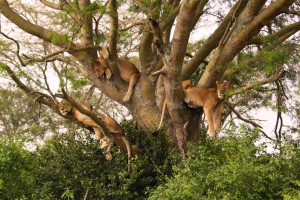
Queen Elizabeth National Park is one of Uganda’s main wildlife destinations. The park contains several habitats including open plains, forests, wetlands and lakeshore areas. These habitats support elephants, buffaloes, lions, hippos, Uganda kobs and many other animals.
The Kazinga Channel boat cruise is one of the main activities in the park. The channel connects Lake Edward and Lake George and attracts large numbers of hippos and water birds. The Ishasha sector in the southern part of the park is known for its tree-climbing lions.
Queen Elizabeth National Park is also useful for travellers planning a western Uganda route because it connects well with Kibale and Bwindi.
Bwindi Impenetrable National Park
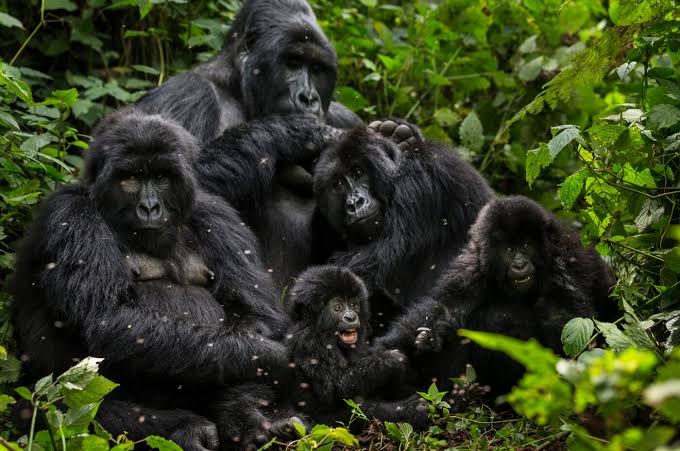
Bwindi is the main destination for gorilla trekking in Uganda. The UNESCO-listed forest lies in southwestern Uganda and provides habitat for mountain gorillas and many other species.
Gorilla trekking involves entering the forest with guides and rangers to search for a habituated gorilla group. The terrain can be steep, and trekking time depends on where the gorillas are located on the day.
A separate gorilla permit is required. Bwindi has different trekking sectors, including Buhoma, Ruhija, Rushaga and Nkuringo. Travellers should choose their accommodation based on the sector where their permit is booked.
Mgahinga Gorilla National Park
Mgahinga Gorilla National Park is also located in southwestern Uganda. It forms part of the larger Virunga conservation area shared by Uganda, Rwanda and the Democratic Republic of Congo.
Visitors can take part in mountain gorilla trekking and golden monkey tracking. The park also offers hiking opportunities on the Virunga volcanoes. Mgahinga can be a good option for travellers who want to combine primate activities with mountain hiking.
Kidepo Valley National Park
Kidepo Valley National Park is in northeastern Uganda and is one of the country’s most remote safari destinations. Its landscape is different from the forested southwest. The park has wide savannah plains, rocky hills and seasonal valleys.
A Kidepo safari can include game drives and cultural experiences involving communities in the Karamoja region. The park has also received renewed conservation attention in 2026. Eight southern white rhinos are planned for reintroduction with the first two transferred from Ziwa Rhino Sanctuary in March 2026. Kidepo requires more travel time than many of Uganda’s other parks. It is therefore better suited to a longer Uganda safari rather than a short trip.
Lake Mburo National Park
Lake Mburo National Park is one of the easiest wildlife parks to include in a western Uganda itinerary. It is located between Kampala and southwestern Uganda making it a useful stop for travellers heading towards Bwindi or Queen Elizabeth National Park.
Activities include game drives, boat trips and walking experiences. The park is known for animals such as zebras, impalas, buffaloes, elands and hippos. Because of its location, Lake Mburo works well at the beginning or end of a longer Uganda safari.
Rwenzori Mountains National Park
The Rwenzori Mountains offer a different type of safari experience. Instead of focusing mainly on game drives, visitors come here for mountain hiking, nature walks and longer trekking expeditions. The Rwenzori range is home to Mount Stanley where Margherita Peak is located. Longer hikes require preparation and appropriate equipment. The mountains can be combined with Queen Elizabeth National Park making it possible to include wildlife and hiking in the same western Uganda itinerary.
Semuliki National Park
Semuliki National Park is located in western Uganda near the border with the Democratic Republic of Congo. The park protects lowland tropical forest and is known for its birdlife, primates and hot springs. It is less commonly included in short Uganda safari itineraries but it can be added to longer trips through western Uganda.
Mount Elgon National Park
Mount Elgon is in eastern Uganda near the Kenya border. The park is suitable for hiking, nature walks and exploring the mountain environment. Travellers interested in hiking can combine Mount Elgon with a visit to Jinja and other attractions in eastern Uganda.
Uganda safari routes for 2026
There is no single route that works for every traveller. Your route should depend on the activities you want and the amount of time available.
A short trip can focus on one region. For example:
Entebbe/Kampala → Lake Mburo → Queen Elizabeth → Entebbe/Kampala.
Another option is to focus on primates:
Entebbe/Kampala → Kibale → Queen Elizabeth → Entebbe/Kampala. Trying to cover too many parks in five days can result in long hours on the road.
Seven days gives you more flexibility. A popular western route is:
Entebbe/Kampala → Lake Mburo → Bwindi → Queen Elizabeth → Kibale → Kampala. This route can include gorilla trekking, wildlife viewing, a boat cruise and chimpanzee tracking.
With ten days, you can spend more time in each destination. One possible route is:
Entebbe → Murchison Falls → Kibale → Queen Elizabeth → Bwindi → Entebbe. This itinerary combines northern and western Uganda and includes wildlife, primates and gorilla trekking.
A two-week trip allows you to slow down the itinerary. You could include:
Entebbe → Murchison Falls → Kibale → Queen Elizabeth → Bwindi → Lake Mburo → Entebbe. Additional days can be used for community visits, nature walks or longer stays in the parks.
Travellers with more time can explore several regions. A longer route could include:
Entebbe → Murchison Falls → Kidepo Valley → Sipi/Mount Elgon → Kibale → Queen Elizabeth → Bwindi → Lake Mburo → Entebbe. This is a long route and requires careful planning. Domestic flights can also be considered for some sections to reduce road travel.
When is the best time for a Uganda safari?
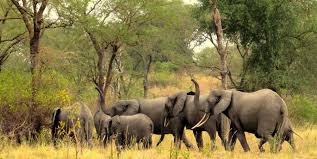
Uganda can be visited throughout the year. The drier periods are popular because some roads and walking trails are easier to use. They can also be useful for wildlife viewing in savannah parks.
The wetter months bring more rain which can make some forest trails and dirt roads difficult. At the same time, the landscapes become green and bird activity can be good.
For gorilla and chimpanzee trekking, weather conditions can change during the day. Rain is possible even during the drier months because the forests have their own weather patterns. Rather than choosing dates only because they are described as the “best time,” consider the activities you want to do and the type of weather you are comfortable with.
How to travel around Uganda
Road travel is the most common way to move between national parks. A safari vehicle with a driver-guide gives travellers flexibility to stop along the route and adjust the programme when necessary. Road conditions and journey times vary. Some routes between major towns are paved while roads inside and around protected areas can be unpaved.
Travellers with limited time can consider domestic or charter flights to selected airstrips. Flying can reduce long road journeys but it can also increase the overall cost of the safari. The best option depends on your budget, available time and itinerary.
How to get to Uganda
Most international visitors arrive through Entebbe International Airport. Uganda has air connections with several African and international destinations. Uganda Airlines also operates a growing network from Entebbe while other international carriers serve the airport.
Travellers should check current flight schedules before booking because routes and frequencies can change. After arriving in Entebbe, you can spend a night near the airport before beginning a road safari. Some travellers also start with a short visit to Kampala or continue directly to their first destination.
Gorilla trekking on a Uganda safari
Gorilla trekking requires more planning than a normal game drive. The number of visitors allowed to see each habituated gorilla group is controlled. Travellers therefore need to secure their permit before fixing the rest of the itinerary. The trek takes place in Bwindi or Mgahinga and can involve steep, muddy and uneven trails.
Good walking shoes, long trousers, a waterproof jacket and a small backpack are useful. Hiring a porter is also an option. Porters can assist with bags and difficult sections of the trail while earning income from tourism. Visitors must follow the instructions of the guides and rangers throughout the trek.
Chimpanzee tracking in Uganda
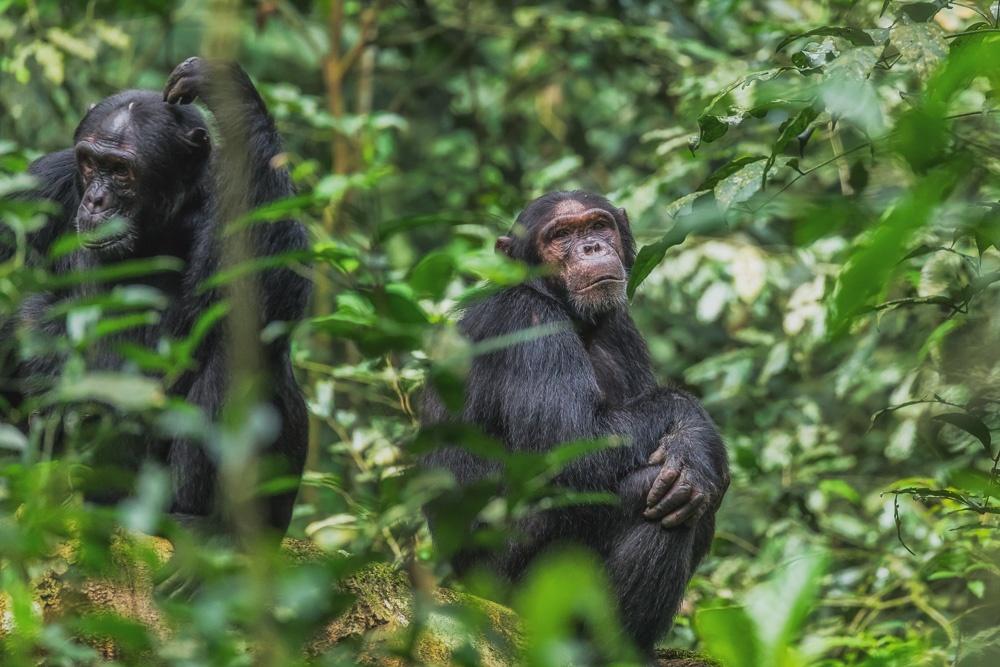
Kibale is the main destination for chimpanzee tracking. The activity involves walking through the forest while guides look for signs of chimpanzee movement. Once a group is located, visitors can observe them from the permitted distance.
Chimpanzee tracking can be combined with gorilla trekking to create a primate-focused Uganda safari. Visitors should also be aware that chimpanzees are wild animals. Sightings are not guaranteed, and the time spent searching can vary.
Wildlife you can see on a Uganda safari
Wildlife differs from park to park. A Uganda safari may include sightings of:
- Lions
- Leopards
- Elephants
- Buffaloes
- Giraffes
- Zebras
- Hippos
- Uganda kobs
- Impalas
- Warthogs
- Elands
- Waterbucks
- Chimpanzees
- Mountain gorillas
- Golden monkeys
Bird watching is another major activity. Uganda’s forests, wetlands, lakes and savannahs support many bird species. Wildlife sightings cannot be guaranteed because animals move freely through their habitats.
Boat cruises on a Uganda safari
A boat cruise adds a different side to a safari. The Kazinga Channel in Queen Elizabeth National Park is one of the best-known locations. Visitors can see hippos in the water and elephants, buffaloes and other animals along the shore.
Murchison Falls also offers a Nile boat cruise towards the falls. Lake Mburo provides another option for visitors who want to explore a lake by boat. Boat trips are useful for photographers and bird watchers because they provide a lower and different viewpoint from a safari vehicle.
Culture and community experiences
Uganda’s tourism is not limited to national parks. A Uganda safari can include visits to communities, cultural centres, markets and historical sites. Visitors can learn about local food, farming, crafts, music and traditional practices.
Around Bwindi, community tourism can be combined with gorilla trekking. In the Karamoja region, cultural visits can complement a Kidepo safari. When choosing cultural experiences, it is useful to work with responsible local operators and community groups.
What to pack for a Uganda safari
Your packing list should match your itinerary. Basic items include:
- Comfortable clothing
- Long trousers
- Walking shoes
- Hiking boots
- Waterproof jacket
- Hat
- Sunglasses
- Sunscreen
- Insect repellent
- Reusable water bottle
- Binoculars
- Camera
- Small backpack
- Personal medication
- Copies of travel documents
Gorilla trekking requires additional preparation because forest trails can be wet and steep. For Kidepo or other savannah parks, light clothing, sun protection and binoculars are useful during game drives.
Uganda safari costs in 2026
The cost of a Uganda safari depends on several factors. These include:
- Number of days
- Number of travellers
- Type of accommodation
- Safari vehicle
- Driver-guide
- Gorilla permit
- Chimpanzee tracking
- Park fees
- Boat cruises
- Domestic flights
- Travel season
Budget, mid-range and luxury safaris can therefore have very different prices. Gorilla trekking is usually one of the largest individual costs on a Uganda safari because the permit is separate from accommodation, transport and other safari expenses. For a 2026 trip, confirm the current park and activity fees before making a payment, as tariffs can change.
Where to stay on a Uganda Safari
Accommodation ranges from campsites and budget lodges to mid-range properties and luxury lodges. The best place to stay depends on the activity and the park sector you are visiting.
For gorilla trekking, choose accommodation close to your assigned trekking sector. This reduces the distance you need to travel for the early morning briefing.
In Queen Elizabeth and Murchison Falls, staying inside or close to the park can also reduce driving time for game drives.
For Kibale, accommodation around the forest and nearby communities makes it easier to reach the starting point for chimpanzee activities.
Responsible travel in Uganda
A responsible safari should benefit both wildlife and local communities.
Visitors should not feed animals, leave rubbish in parks or approach wildlife without guidance.
During gorilla and chimpanzee activities, health and distance rules should be followed carefully.
Travellers can also support communities by hiring local porters, buying locally made products and using community-based tourism services.
Choosing a tour operator licensed by the Uganda Tourism Board is another useful step when planning a safari.
Frequently asked questions about Uganda safari
How many days do I need for a Uganda safari?
Seven to ten days is a useful length for combining several western Uganda destinations. Longer trips are better if you want to include Murchison Falls, Kidepo Valley or the Rwenzori Mountains.
What is the best Uganda safari route?
There is no single best route. A western Uganda route covering Lake Mburo, Bwindi, Queen Elizabeth and Kibale works well for travellers interested in gorillas, chimpanzees and wildlife.
Where can I see gorillas in Uganda?
Mountain gorilla trekking takes place in Bwindi Impenetrable National Park and Mgahinga Gorilla National Park.
Where can I see chimpanzees in Uganda?
Kibale National Park is the main destination for chimpanzee tracking. Other chimpanzee experiences are available in selected protected areas like Budongo Forest Reserve and Kyambura Gorge.
Is Uganda good for a wildlife safari?
Yes. Uganda has several savannah parks where visitors can see elephants, lions, buffaloes, giraffes, antelopes and other wildlife. Forest parks add chimpanzees, gorillas and other primates.
What is Uganda known for?
Uganda is known for mountain gorillas, chimpanzees, the River Nile, savannah wildlife, the Rwenzori Mountains, lakes, forests and cultural diversity.
Is Kidepo Valley worth adding to a Uganda safari?
Kidepo is suitable for travellers who have enough time and want to visit a remote part of Uganda. It requires longer travel compared with parks in western Uganda so it is best included in a longer itinerary.
Can I combine a Uganda safari with gorilla trekking?
Yes. Gorilla trekking can be combined with Queen Elizabeth National Park, Kibale National Park and Lake Mburo National Park to create a mixed wildlife and primate itinerary.
Do I need a guide for a Uganda safari?
For activities inside national parks, visitors generally take part in activities managed or regulated by the relevant authorities. A driver-guide is also useful for road safaris because they handle navigation and help visitors understand the wildlife and surroundings.
Planning your Uganda safari in 2026
The best Uganda safari itinerary is one that gives you enough time to enjoy each destination without spending most of the trip travelling between parks.
Start by choosing your main activity. If gorillas are the priority, secure the permit first. If wildlife is your main interest, consider Queen Elizabeth, Murchison Falls, Kidepo Valley or Lake Mburo. If primates are important, add Kibale.
You should then decide whether to travel by road or include domestic flights.
Check your accommodation, park activities, entry requirements and transport before travelling. It is also useful to leave some flexibility in the programme because weather and road conditions can affect travel times.
Uganda has many places to explore but you do not need to visit all of them in one trip. A well-planned route can combine wildlife, primates, landscapes and culture while leaving enough time to enjoy each stop.